
Most bands do not have a music problem. They have a “nobody knows we exist” problem. You can be the tightest four-piece in your town, the songs can be genuinely good, and you can still play to twelve people on a wet Tuesday because the work of getting found never happened. So if you want to know how to promote your band on close to no money, the honest starting point is this: the bands that grow are rarely the most talented ones. They are the ones who treat promotion as part of the job and do the dull bits consistently.
A quick word on who is writing this. My day job is marketing. I have spent more than 20 years helping businesses grow, from large international companies with budgets in the millions down to tiny local outfits with almost nothing to spend, and the reviews on this site will tell you more than I should here. Music, though, is the other thing. My wife Corina and I are out at small gigs most weekends. We have bought hundreds of CDs and t-shirts, volunteered at festivals and venues, and over the last few years we filmed more than 500 live clips of bands, often from two angles, edited at our kitchen table to show the energy of the show. All free. I will not pretend I have run every kind of music advertising campaign, because I haven’t. But I have watched, up close, what actually moves the needle for small and medium indie bands, and I have helped a few directly. This is that, written down.
The scene got harder, and that is your opening
Let’s not sugar-coat the room you are walking into. UK grassroots music is having a rough time. According to the Music Venue Trust’s 2025 annual report, 30 grassroots venues closed permanently in the year to mid-2025, more than half of the surviving ones made no profit at all, and 175 UK towns and cities no longer get regular touring shows. Read that last number again. That is around 25 million people whose local stages have gone quiet.
Now hold that next to a different figure. UK music contributed a record £8 billion to the economy in 2024, according to UK Music. Eight billion. The industry has never been worth more. The money has just bunched up at the top, while the bottom rung of the ladder, the rung you are standing on, is the bit that is cracking.
Here is the part most bands miss. A tougher scene is not only bad news for you. It is a filter. When fewer venues can take a punt on an unknown act, the bands that get booked are the ones who can prove they will bring people through the door. Promotion stops being a vanity exercise and becomes the thing that makes you bookable. Get good at it and you leapfrog dozens of better musicians who never bothered.
Stop doing these things first
Before we add anything, take a few things away. Most band promotion fails on basics, not budget, and these are the ones I see again and again.
Chasing streams as if they were income. They are not, and I will get to the maths in a minute. Treating Spotify numbers as your scoreboard sends you chasing the wrong thing.
Buying followers, streams or playlist placements. Tempting. Don’t. Spotify is blunt about this: any service that “guarantees streams, Spotify followers, or playlist placement in exchange for money is not legitimate,” and since 2024 it removes the streams, withholds the royalties and fines the distributor who passes the cost back to you. You can buy a number. You cannot buy a single fan who turns up.
Not capturing a single email at gigs. You spent weeks getting forty people into a room who liked you enough to clap. Then you let every one of them walk out the door with no way to tell them about the next show. That is the promotional equivalent of leaving the pint behind the bar.
Posting “check out my band” and nothing else. Nobody clicks it. It is the flyer-through-the-letterbox of social media, and it goes straight in the mental bin.
Having no live video. A booker wants to picture you on their stage. A studio track does not do that. More on this below, because it is the single most common gap I see.
Ignoring the fans you already have while you chase new ones. The forty people who came last time are worth more than four thousand strangers. Look after them first.
Set up the free foundations
None of this costs money. All of it gets skipped. Spend a weekend and do the lot.
Spotify for Artists. Free. It gets you your verified profile, your listener data, and the ability to pitch one unreleased track to Spotify’s editorial playlists before each release. Most pitches do not get placed, so do not bet the farm on it, but it is free and it is the only legitimate route in, so submit every time, at least a week ahead.
Bandcamp. This is where you actually sell things. It returns around 82% of revenue to artists, and on Bandcamp Friday it waives its cut entirely. Those Bandcamp Fridays paid out 19 million dollars to artists in 2025 alone. Compare that to fractions of a penny per stream and you see the point.
Bandsintown for Artists. Free gig listings that push out to Spotify, Apple Music and the rest, and email every fan who “tracks” you the moment you announce a date. It turns a passive follower into someone who gets a nudge when you play near them.
BBC Introducing. If you are a UK act and you are not uploading to BBC Introducing, fix that this week. Regional teams genuinely listen, route by postcode to local shows, and it has been a feeder to Radio 1 play and festival stages for years. It is the closest thing to a free lottery ticket that actually pays out.
PRS and PPL. This is the money bands leave on the table without realising. PRS for Music collects royalties for the song you wrote. PPL collects for the recording you made. If you write and record your own material, you should be registered with both, or you are giving away money you have already earned every time you are played on radio or in a licensed venue. It is admin. Do it anyway.
Streaming is a shop window, not a salary
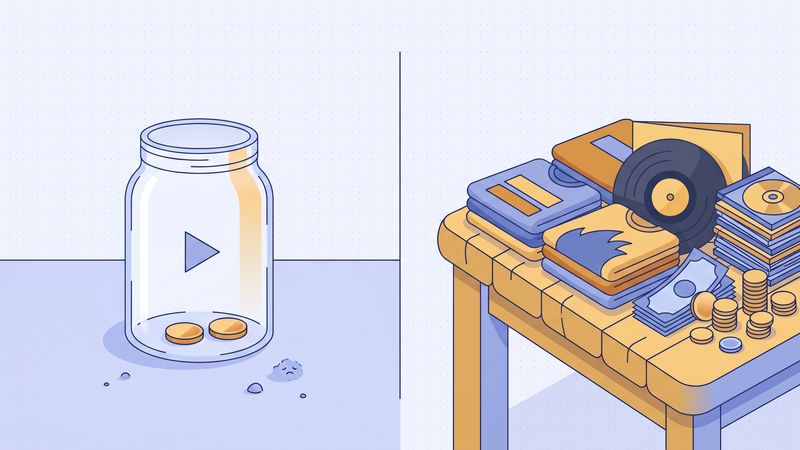
Time for the maths, because it reframes everything. Independent estimates put Spotify’s payout somewhere in the region of 0.003 to 0.005 dollars per stream, and there is no fixed rate anyway, because it pays out of a shared pool. Since April 2024 a track also has to clear 1,000 streams in a year before it earns anything at all. And in 2024, out of roughly 12 million uploading artists, about 22,100 made 50,000 dollars or more from Spotify. That is well under one percent.
So no, streaming is not going to pay your rent. But that is the wrong way to use it. Streaming is your shop window. It is the proof a booker checks when they want to know if you are worth a slot, the place a new fan lands after they see a clip, the credibility number on your press kit. Treat your monthly listeners as a reputation metric, not a wage.
The money lives somewhere else. It lives in the people who like you enough to buy a record, a shirt, or a ticket. Which is why the next two sections matter more than your stream count ever will.
Short-form video is your biggest free engine
If I could get every band to do one new thing, it would be this. Film yourselves. Constantly.
Short-form video is where music gets discovered now. TikTok’s own research with Luminate found that 84% of the songs that entered the Billboard Global 200 in 2024 went viral on TikTok first, and its users are far more likely than the average person to go off and find new music after a clip grabs them. Reels and YouTube Shorts ride the same wave. You do not need a label, a budget or a videographer. You need a phone and the willingness to look slightly daft on camera.
Here is the bit I can speak to personally. For a few years, Corina and I filmed bands at the gigs we went to, usually one song, from two angles, then cut them together in Filmora so you could feel the energy of the room rather than just hear it. Over 500 of them. We did not charge a penny. And the feedback taught me something I would not have guessed: the clips helped bands in ways far beyond the views. Some got booked off the back of a video a promoter watched. Some spotted things in their own stage performance, a habit to drop, a moment that landed, and changed the act. Loads simply had a steady stream of content to post when they would otherwise have gone quiet for weeks. We do fewer of the two-angle edits now, because the editing eats whole evenings, but we still film one clip at almost every gig we go to.
The lesson for you: live clips are the most useful thing you can make, because they work twice. They feed the algorithm that finds you new fans, and they are exactly what a booker wants to see when you ask for a bigger stage. Get a mate to film a song at every show. Use the decent phone audio, not the desk feed nobody can hear over the crowd. Post consistently, somewhere in the two to five posts a week range that actually builds momentum, and stop deleting the ones that feel imperfect. Wonky and real beats polished and absent.
If the wider social side feels like a fog, I wrote a separate piece on playing to each platform’s strengths that applies just as well to a band as to a business.
Quick aside, since you might be wondering if I practise any of this: I still play in a band myself. Rarely gig these days, mostly for the fun of it and to switch the marketing brain off. So I am not lecturing from the cheap seats. I just happen to do the promotion side for a living.
If you have read this far and you are thinking “fine, but where do I even start with my band specifically,” that is exactly the conversation I am happy to have. Message me on WhatsApp or drop me a line through the contact form and I will give you 30 to 60 minutes, free, on where I think you should focus first. No pitch. I just like seeing local bands do well.
Build something you own: the email list
Followers are rented. The platform owns them, the algorithm decides who sees you, and one rule change can wipe your reach overnight. An email list is the one audience you actually own. Nobody can throttle it, and it follows you if you ever leave a platform or get pulled from one.
The reach gap is not small either. A musician’s email newsletter will typically be opened by a healthy chunk of the list, while organic social posts reach only a sliver of your followers on a good day. So a list of 500 people who chose to hear from you is worth more than ten times that many idle social follows.
This is where Kevin Kelly’s “1,000 True Fans” essay, written back in 2008 and somehow truer now, comes in. His argument: you do not need to be famous. You need maybe a thousand people who will buy more or less anything you make. A thousand fans spending a hundred pounds a year each is a hundred thousand pounds. You will not get there overnight, and most bands never need the full thousand to make it worthwhile, but the direction of travel is the point. Build a direct line to the people who genuinely care.
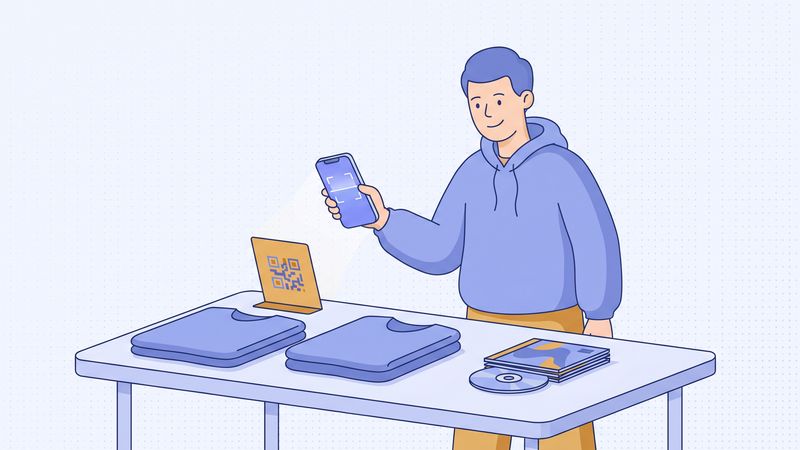
The practical move is almost embarrassingly simple. Put a signup sheet, or a QR code on a card, on the merch table. Tell people from the stage that you will let them know about the next gig. Free tools like Mailchimp or MailerLite cost nothing until you have a real list. Then actually email them, once in a while, like a human. Not “buy our stuff.” More “here is where we are playing, here is a new song, thanks for being there.”
Getting gigs and climbing towards festivals
Now the bit everyone actually wants: more gigs, and bigger ones. The uncomfortable truth is that bookers do not book the best band. They book the band that makes their night work, which usually means the band that brings people.
So your first job at the local level is to become a reliable draw. Promote every show like it matters, because the promoter is watching how hard you push tickets. Fill a small room twice and you will get asked back, and asked up the bill. That is the whole game at the bottom: prove you move people, literally.
Support slots are the cleanest way up. Follow the promoters and venues you want to play, get on their mailing lists, and when a touring act that suits your sound announces a date near you, email the promoter and offer to open. Be easy to deal with. On the night, help promote the show, treat the venue staff well, and have a real conversation with the headliner’s tour manager. That relationship is worth more than any flyer.
Avoid pay-to-play. If a “promoter” asks you to buy a block of tickets up front and sell them on, that is not a gig, it is you carrying their risk. The arrangement is almost always built for someone else to profit. A far better version of the same idea: team up with two or three local bands, hire a room yourselves, share the costs and the door, and keep the upside. You promote it together, you all bring your crowds, everybody wins.
Festivals run on a different clock. Many UK festival “apply to play” windows open in autumn and close over winter, so you are pitching for next summer months ahead. When you apply, what gets you noticed is not a long bio. It is two great songs, a recent live video, and streaming numbers that show people are paying attention. BBC Introducing is also a genuine festival pipeline, with stages and slots at major UK festivals every year for the acts its regional teams champion.
Which brings us to the document that opens all of these doors.
The EPK bookers actually want
An electronic press kit, or EPK, is your job application for every gig and festival. A booker will give it about ninety seconds, so it has to land fast. Strip it to what they need:
- A one-line description of who you are and what you sound like, then a short paragraph
- Links to your two best tracks
- A recent live performance video, the most important item by a mile
- A few good photos they can use for posters and listings
- Any press, notable support slots, or honest numbers (monthly listeners, mailing list size)
- Past and upcoming shows, and a contact that gets answered
That is it. No essays. The live video does the heavy lifting, because, again, bookers buy what they can picture on their stage.
Merch and direct sales: where the money actually is
I touched on this, but it deserves its own moment because it is so badly underrated. Band merch typically runs at 50 to 70% profit margins, so a 25 pound shirt might net you 12 to 15 pounds. Set that against three-tenths of a penny per stream and the comparison is almost rude. One decent merch table on a good night can out-earn weeks, sometimes months, of streaming.
This is exactly why Corina and I have bought hundreds of CDs and shirts over the years. Not because we needed another tote bag, but because for a small band that twenty quid at the table is real, immediate money that keeps the wheels turning, in a way streaming income simply is not at that level.
So: have stock at every gig. A couple of t-shirt designs, the CD or vinyl if you have it, maybe stickers as the cheap impulse buy. Take card payments, because nobody carries cash any more. Mention it from the stage once, lightly. And lean into Bandcamp Friday, when the platform takes nothing, to push your physical and digital sales to the fans who would rather give the money to you than to a streaming pool.
UK help most bands never claim
There is a small support network built for exactly your situation, and most bands never touch it.
- PRS for Music and PPL. Register, collect what you have already earned. Covered above, repeated because it is the most-skipped one.
- Help Musicians. A UK charity offering grants, crisis support, and Music Minds Matter, a free 24/7 mental health line for people in music. The grind is real and the support exists.
- The Featured Artists Coalition. Advocacy for artists, plus funding initiatives aimed at grassroots touring, run with the Musicians’ Union and others.
- The Musicians’ Union. Contracts, legal advice, and someone in your corner when a venue or “promoter” tries it on. Worth the membership for the contract templates alone.
- The Music Venue Trust. Not a service for you directly, but the people fighting to keep the rooms you need open. Worth following, and worth supporting if you ever can.
None of this replaces the work. All of it makes the work a bit less lonely and a bit less precarious.
Where to start this week
If the whole list feels like a lot, it is, so do not try to do it all at once. Pick the few things that compound.
This week: set up Spotify for Artists, Bandcamp and Bandsintown, upload to BBC Introducing, and get a signup sheet on the merch table at your next gig. Next gig: film one song, properly, and post it. Every gig after that: capture emails, sell merch, document the night, talk to the promoter. Register with PRS and PPL when you next have a quiet afternoon.
That is genuinely most of it. Not clever, not expensive, just consistent. The bands that grow are the ones still doing the dull bits in month six, when the novelty has worn off and the views are flat and it would be easier to stop. Don’t stop.
And if you want a second pair of eyes on where your band specifically should focus, the offer stands. Send me a WhatsApp message or use the contact form, and I will happily spend half an hour to an hour with you, free, working out where you should start. I love live music, we both do, and helping a good band get heard is about the most satisfying use of a marketing brain I can think of.