
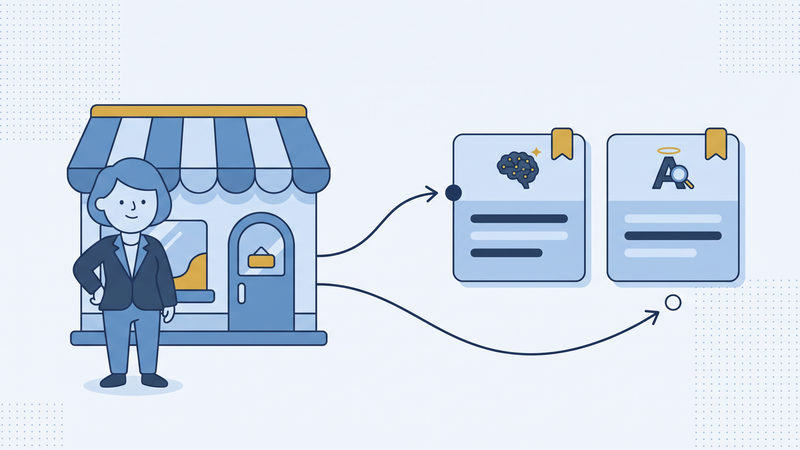
On 28 July 2026 I asked ChatGPT and Perplexity the same three questions a real customer would ask. Best emergency plumber in Nottingham. Best wedding photographer in Bristol. Reliable car garage in Norwich.
Between them, the two engines named thirty businesses.
They agreed on one.
That single number is the thing most advice about how to get your local business named by ChatGPT quietly skips. AI visibility gets talked about as one scoreboard: one list of winners, one set of rules, one badge to earn. It is nothing of the sort. Ask two assistants the same local question and you get two almost completely separate sets of companies, picked through different middlemen, for different reasons, on the same afternoon.
So this piece does two things. It shows you what the engines actually did when asked, with the raw counts. Then it uses scan data from 749 websites to show which fixes move the needle and which ones are just fashionable.
What the test found:
- Across three identical local searches run on ChatGPT and Perplexity on 28 July 2026, the two engines named 30 businesses between them, and only one business was named by both.
- Of 50 sources Perplexity cited across five UK local searches, 13 (26%) were the businesses’ own websites, 30 (60%) were directories or ranked listicles, and 5 (10%) were Reddit or Facebook threads.
- Across the XEOscan signal breakdown, 95% of domains failed the “sources its claims” check (117 of 123) and 90% failed “citable answer passages” (83 of 92), while only 5% failed on basic indexability (12 of 225).
We asked both engines the same thing. They agreed once.
Three queries, run on both engines, logged in from the UK, on the same day. Here is who got named.
| Query | Named by Perplexity | Named by ChatGPT | In both |
|---|---|---|---|
| best emergency plumber in Nottingham | Emergency Hero, Urgent Plumbing & Heating, Dyno-Rod | Aquasure Plumbing, Ben Plumber Ltd, Nottingham Gas & Plumbing, Urgent Plumbing & Heating, Midlands 24hr Plumbing, BL Plumbers | 1 |
| best wedding photographer in Bristol | Richard Lewis, Ali Paul, Gem Hicks, Gould Photography, Sam Baly | Katherine Barnes, Martin Dabek, Stewart Clarke, Karl Moriarty, Albert Palmer, Sam Gibson, Simon Withyman, Mark Leonard | 0 |
| reliable car garage in Norwich | Redline MOT & Service, G & N Autos, Melrose Garage, Drayton Service Centre | Gotts Service Centre, A G R Autos, Turners Garage, MOTs 610 Com, MJ Garage | 0 |
Urgent Plumbing & Heating in Nottingham was the only business both engines put forward. Thirteen wedding photographers were recommended in Bristol across the two answers and not one of them appeared twice.
Same three searches. 30 businesses. One agreed.
ChatGPT and Perplexity, run 28 July 2026. Each square is one business named in the answer.
best emergency plumber in Nottingham
best wedding photographer in Bristol
reliable car garage in Norwich
One overlap in thirty. Only Urgent Plumbing & Heating in Nottingham was named by both engines. It is the gold square, and it appears in both rows of the first search.
It gets stranger when you look at how each engine got there. For the photographers, Perplexity built its entire answer on Hitched. ChatGPT built its entire answer on Bridebook and Reddit. Two engines, two wedding directories, zero shared names. The businesses did nothing differently. They were simply listed in different places.
And yes, the engines get things wrong. Perplexity’s Bristol answer cited a WeddingWire page for Bristol, Rhode Island. Different country, same name, straight into a UK answer.
So who actually gets cited?
Across five Perplexity searches I logged all 50 cited sources and sorted them by what kind of page they were.
| Source type | Count | Share |
|---|---|---|
| Directory or ranked listicle | 30 | 60% |
| The business’s own website | 13 | 26% |
| Reddit or Facebook thread | 5 | 10% |
| Editorial guide | 2 | 4% |
Six in ten citations went to somebody else’s list. That is the headline most people take away, and it is the wrong one, because the average buries the only fact that matters to you.
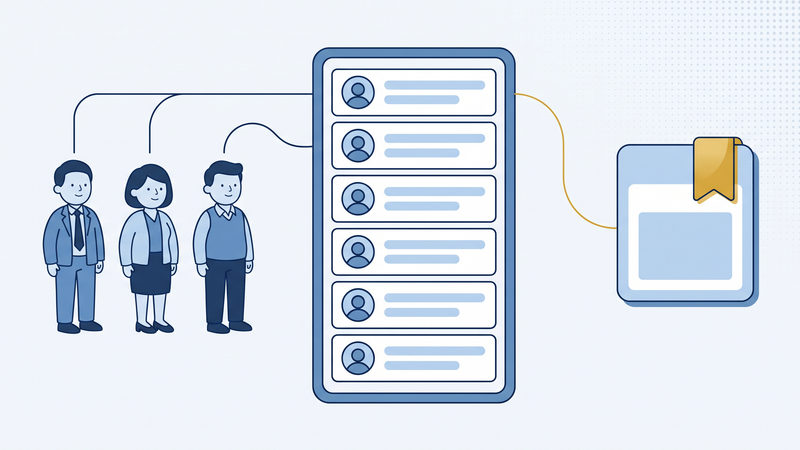
Look at it query by query and the picture falls apart in a useful way. For the emergency plumber search, seven of the ten cited sources were plumbers’ own websites. For the wedding photographer search, the number of photographers’ own websites cited was zero. Not low. Zero.
Same engine. Same day. Same question shape. Completely different rules.
Your trade decides whether your website is even in the game
Three patterns showed up, and they map onto how people buy rather than onto anything technical.
Urgent work rewards your own site. Someone with water coming through the ceiling wants a phone number and a promise about timing. Perplexity read that straight off the plumbers’ pages. It even quoted Emergency Hero’s own marketing copy as fact: 87% of call-outs attended within 90 minutes, 4.6 from 500+ reviews. Nobody checked that claim. It went from a business’s website into an AI answer because it was specific and sat there in plain text, ready to be lifted.
Considered purchases run through directories. Weddings, dentistry, anything people research for weeks. The dentist search in Leeds pulled its whole ranking from a single listicle called BigLove, which had ordered Leeds practices by Google review count. One page, written by a third party, decided the entire answer. Your website was not consulted.
Trust categories run on Reddit. The Norwich garage query cited three separate Reddit threads on Perplexity, and ChatGPT cited Reddit too. When the buying risk is “will this person rip me off”, both engines go looking for strangers arguing in public. We covered why that happens in Reddit is eating search, and local trades are where it bites hardest.
Your trade decides who gets read
Where Perplexity took its sources from, by category. Five UK local searches, 28 July 2026.
Emergency plumber, Nottingham
7 of 10cited sources were the businesses' own websites
Your own pages are read. Put specific, checkable claims on them.
Wedding photographer, Bristol
0 of 10own websites cited. Every name arrived via a directory
Your listing is the battleground, not your site. Get on the category directory.
Car garage, Norwich
3 threadsseparate Reddit threads cited in a single answer
Reputation in local communities. No shortcut, and you cannot fake it.
Find your bucket first: run "best [your trade] in [your town]" on both engines and read the citations.
There is a fourth pattern worth naming: sometimes nobody wins. Asked to recommend an electrician in Sheffield, Perplexity refused to name a best one at all and sent the user off to Checkatrade, MyBuilder and TrustATrader to compare. For some trades the engines have decided the directory is the answer. No amount of work on your website changes that this quarter.
Before you touch anything on your site, find out which bucket you are in. Run your own “best [your trade] in [your town]” query on both engines and read the citations. Ten minutes. It tells you whether you are fighting for a citation or fighting for a directory listing, and those are different jobs.
The web fixed its plumbing and forgot how to write
Now the second dataset. XEOscan is a free scanner I built that fetches a site the way an AI crawler does, with no JavaScript executed, and scores it across 47+ signals. It has scanned 749 websites. The signal breakdown below covers 227 domains, taking only the first scan of each so nobody’s repeat testing skews it.
One caveat, stated plainly: these are self-selected sites. Somebody cared enough about AI search to run a scanner. If anything, that makes the numbers flattering.
| Signal | Sites failing | Sample |
|---|---|---|
| Sources its claims | 95% | 117/123 |
| Citable answer passages | 90% | 83/92 |
| Enough body text to cite | 85% | 194/227 |
| Question-shaped headings | 79% | 96/122 |
| Clear entity statement up front | 63% | 128/203 |
| Organisation schema complete | 55% | 59/107 |
| Verifiable identity links (sameAs) | 54% | 68/127 |
| llms.txt present | 52% | 116/225 |
| Structured data present | 44% | 100/227 |
| AI crawlers can read the site | 14% | 31/225 |
| Sitemap reachable | 12% | 28/225 |
| Page is indexable | 5% | 12/225 |
| Served over HTTPS | <1% | 1/225 |
Read that table from the bottom up and something obvious falls out. The technical foundations are largely sorted. HTTPS is a solved problem. Almost every site is indexable and reachable. Only 14% have any problem with AI crawler access, which is far better than the panic suggests.
What fails is the writing.
95% of sites do not source their claims. 90% have no passage an assistant could quote cleanly. 85% do not have enough body text to cite in the first place. We spent fifteen years teaching businesses to fix their technical SEO and they did it, and now the bottleneck has moved somewhere nobody is looking.
The plumbing is fine. The prose is not.
Share of scanned domains failing each signal. XEOscan, first scan per domain, sample shown after each figure.
Self-selected sample: these are sites whose owners chose to run a scanner. If anything the numbers flatter the web.
Here is the mildly annoying bit. The fashionable fix right now is llms.txt, and 52% of scanned sites are missing one. It is on every checklist. It takes ten minutes. And it is nowhere near your binding constraint if 90% of your pages contain nothing quotable. Adding a file that tells an assistant where to look is a funny thing to do when what it finds when it gets there is a hero image, three testimonials and a contact form.
What do you actually change to get named by ChatGPT?
Both datasets point the same way, so the list is short.
Publish specific, checkable claims in plain text. Emergency Hero got quoted because its site said 87% within 90 minutes, not because it said “fast, friendly service”. Numbers get lifted. Adjectives get ignored. Response times, years trading, jobs completed, warranty length, coverage radius, price ranges: put the actual figures on the page as sentences, not buried in an image or a PDF.
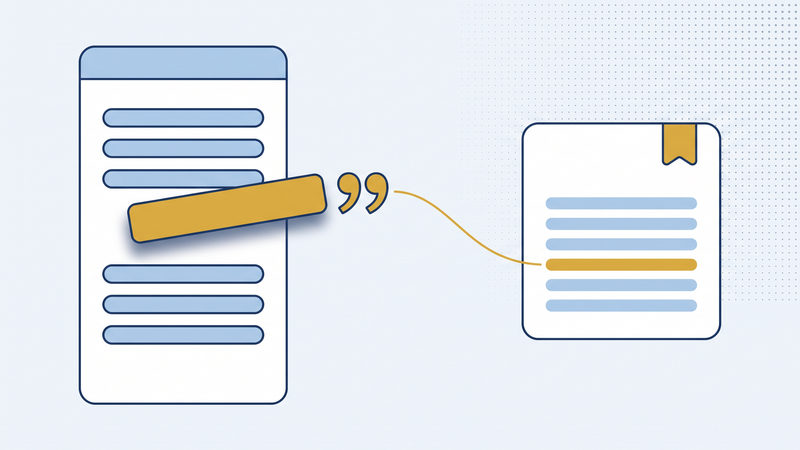
Write each fact so it survives being cut out. An assistant quotes one line at a time. “We cover Norwich and a 20 mile radius, with same-day call-outs before 3pm” works alone. “We also cover the surrounding area, as mentioned above” does not. This is what the citable answer passages check is measuring, and it is the most failed signal after sourcing.
Say who and where you are, up front. 63% of sites have no clear entity statement in the first screen of the homepage. One sentence: who you are, what you do, where you do it. It sounds too simple to matter. It is the thing that lets an engine match you to “in Nottingham” with any confidence.
Get listed where your category’s gatekeeper is. If you are a wedding photographer, your website is not the battleground this year, Hitched and Bridebook are. If you are a trade, it is Checkatrade and TrustATrader. This feels like a step backwards after a decade of “own your own platform” advice. Do it anyway, because the citation data says that is where the engines are actually reading.
Turn up in the community threads, honestly. Both engines cited Reddit for the garage query. You cannot fake this and you shouldn’t try, but you can make sure that when someone asks in a local group, there is something true and findable to say about you.
Then do the technical bits. Organisation schema, sameAs links to your profiles, a reachable sitemap, unblocked AI crawlers. Worth doing, quick to do, and covered properly in our GEO playbook and the eight signals that decide whether AI cites your site. Just do them after the writing, not instead of it.
How do you know if any of it is working?
This is where most people come unstuck, because the obvious metric has stopped working.
Zero-click searches now account for 68% of US Google queries, according to SparkToro research using Similarweb clickstream data, reported by Search Engine Land. That is up from 60.45% in 2024, and on mobile it runs closer to 77%. Google search traffic to publishers fell 33% globally in the year to November 2025, according to Chartbeat data published in the Reuters Institute’s 2026 trends report. If your only measure of visibility is sessions, you will watch a number fall while your actual reach grows, and you will draw exactly the wrong conclusion from it.
Meanwhile AI referral traffic is still tiny in volume. Semrush put it at 0.14% of total web visits across more than 50,000 sites in 2025. It also converts better than almost anything else you have. Similarweb puts ChatGPT referral conversion at 7.1%, second only to paid search, with visitors averaging notably longer on site than Google visitors. Small numbers, good numbers.
So count three things instead.
First, citations. Run your category’s queries on ChatGPT and Perplexity once a month and record whether you are named and which source got you there. It is manual and it takes fifteen minutes. It is also the only direct measure of the thing you are trying to change.
Second, referrals, tracked properly. In GA4, start with the AI Assistant channel in your Default Channel Group. Google added it in May 2026, and it tags recognised referrals with the medium ai-assistant. Two caveats. It covers ChatGPT, Gemini and Claude only, so Perplexity and Copilot still land in plain Referral and you need an exploration segmented by session source to catch perplexity.ai and copilot.microsoft.com. And clicks from the native ChatGPT apps carry no referrer at all, so they fall into direct. Whatever you measure is a floor, not a total.
Third, the assisted stuff. People read an AI answer, then search your brand name, then arrive. That shows up as a rise in branded search with no matching rise in generic organic. If branded queries in Search Console climb while your generic rankings sit still, something is recommending you somewhere you cannot see.
Three things worth counting
Sessions stopped being the measure when 68% of US Google queries stopped producing a click.
Citations
- Run your category queries on ChatGPT and Perplexity once a month.
- Record whether you are named, and which source got you there.
- Manual, fifteen minutes, and the only direct measure you have.
Referrals
- Use the GA4 AI Assistant channel, added by Google in May 2026.
- It covers ChatGPT, Gemini and Claude only. Perplexity and Copilot still land in Referral.
- Native app clicks carry no referrer, so they land in direct. Treat the total as a floor.
Branded search
- Watch branded queries in Search Console against generic rankings.
- Branded climbing while generic sits still means something is recommending you.
- It is the only signal that catches an answer with no click attached.
Compare AI referral conversion against organic, not its volume. The volume will always look disappointing.
Getting your local business named by ChatGPT: where to start
The thirty-businesses-one-overlap result is not a curiosity. It is the strategy.
There is no single AI ranking to win. There are separate engines reading separate sources, and for some trades the source they read is not your website at all. Anyone selling you one AI visibility package is selling you an average of three different problems.
So start narrow. Run your own query on both engines this week and write down what got cited. If it is your competitors’ websites, your writing is the job: specific claims, quotable sentences, a plain statement of who and where you are. If it is a directory, your listing is the job. If it is Reddit, your reputation is the job and there is no shortcut.
Then check the plumbing, which for most sites turns out to be fine already. You can scan your site free with XEOscan and see which of the 47+ signals you are missing in about ten seconds.
The businesses getting named by ChatGPT right now are not the ones with the cleverest technical setup. They are the ones who wrote down something specific enough to quote, in the place their category’s engine happens to be reading. That is a lower bar than it sounds. Almost nobody has cleared it.